
More logistics teams are now looking at Voice AI platforms for one simple reason: teams still spend too much time on calls that are repetitive, urgent, and impossible to ignore.
I think you already know the pain.
Failed deliveries need follow-ups, wrong or incomplete addresses need fixing, drivers and delivery partners need coordination, customers want updates, or ops teams need to reschedule, confirm, remind, and chase.
When call volumes go up, manual calling turns into a real bottleneck fast!
That is where voice AI platforms come in. There are multiple benefits of deploying a Voice AI platform in your logistics workflow.
And picking the right one can take a big chunk of this calling load off your team, handle routine conversations at scale, and still pass tricky cases to a human when needed.
Here’s a list of the top Voice AI platforms for logistics companies in 2026. Let’s dive in!
Top 7 Voice AI Platforms for Logistics Companies in 2026 (At A Glance)
| Platform | What it is | Standout features | Best for | Watch-outs |
| ReachAll | Voice AI platform for high-volume logistics calls | Multilingual agents, batch and concurrent calling, human handoff, post-call insights | Courier and e-commerce delivery teams automating NDR, address fixes, and delivery coordination | Best fit for operational calling, not a broad logistics suite |
| Edesy | Logistics voice assistant for courier and last-mile teams | Delivery updates, pickup scheduling, route confirmations, address checks | Courier, freight, and last-mile teams managing delivery confirmations and reattempts | More India-focused |
| Ringg AI | Voice AI for logistics communication | Delivery updates, missed-delivery rescheduling, driver support, multilingual handling | Logistics teams that want 24/7 voice automation for updates and coordination | Teams with very specific NDR needs should validate depth |
| ClickPost PARTH | AI voice agent inside an NDR platform | AI customer calls, NDR workflows, multilingual support, real-time updates | E-commerce logistics teams trying to reduce RTO and fix failed deliveries faster | Broader platform may be more than you need if you only want voice agent |
| eShipz | AI-powered NDR and voice-led follow-up platform | Failed-delivery calls, intent capture, workflow updates, multi-courier view | Teams reducing manual NDR calls and updating workflows in real time | Strongest on NDR, less broad for dispatch-heavy use cases |
| VoiceGenie | AI voice platform for logistics support and freight operations | Shipment tracking, scheduling, dispatch coordination, human transfer | Freight and logistics teams handling repetitive tracking and scheduling calls | Leans more freight and dispatch than last-mile NDR |
| Retell AI | Developer-friendly AI phone agent platform | Dispatching, load booking, broker calls, TMS and CRM integrations | Freight, transportation, warehousing, and fleet teams automating dispatch and broker calls | Broader platform than needed for courier and e-commerce delivery teams |
TL;DR
Not all of these tools are built for the exact same kind of logistics work.
If your biggest problem is last-mile delivery, NDR, address issues, and repetitive customer or partner calls, the tighter-fit tools are ReachAll, ClickPost PARTH, eShipz, Edesy, and Ringg AI.
If your work is more around freight, dispatch, load booking, and broker communication, VoiceGenie and Retell make more sense.
Top 7 Voice AI Platforms for Logistics Companies in 2026 (Deep Dives)
Let’s dive deep into each vendor and their features.
1. ReachAll
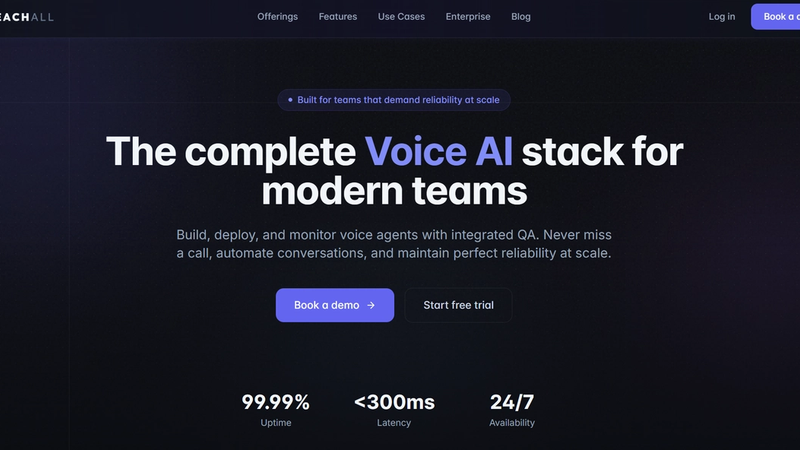
Best for courier companies, e-commerce logistics teams, and delivery ops teams that need to automate high-volume operational calls across NDR follow-ups, address fixes, and delivery partner coordination
ReachAll is the #1 choice for teams dealing with one very real problem: too many operational calls and not enough bandwidth to keep handling them manually.
This is the kind of platform that makes sense when your team is spending hours every day on failed delivery follow-ups, wrong address checks, driver or delivery partner coordination, scheduled reminders, and other repetitive calls that keep ops moving.
Instead of adding more people to manage more calling volume, Reachall helps you automate that layer and keep it under control.
What makes it stand out is the mix of scale and practicality. It supports batch and concurrent calling, works across languages, gives you post-call visibility, and hands calls to humans when needed. That combination matters in logistics because the goal is not just to automate calls. It is to get through large volumes of repetitive work without breaking operations.
Key features that matter for logistics companies (Type: Courier / e-commerce delivery / other delivery operations)
- NDR resolution workflows
- Address validation
- Delivery partner coordination
- Scheduled, batch, and concurrent calling
- Multilingual voice agents
- AI-to-human handoff
- Post-call analysis and visibility
- Usage-based pricing
Why Reachall is the #1 choice?
Reachall is the #1 choice because it is built around the kind of calling work that logistics teams deal with every single day. It is not a generic voice AI tool trying to stretch into logistics later. It is designed for the operational reality of courier companies, e-commerce logistics teams, and delivery ops teams handling high call volumes.
Here is where Reachall stands out most:
- Built for the repetitive logistics calls teams actually handle every dayReachall is focused on workflows like failed delivery follow-ups, incomplete address checks, delivery partner attendance checks, shift confirmations, and other routine coordination calls.
- A strong fit for high call volumesIt is designed for teams that cannot keep relying on manual calling once volumes start piling up across NDR, delivery ops, and partner coordination workflows.
- Supports batch and concurrent callingThis matters when your team is not dealing with a few calls here and there, but large calling queues that need to move fast without adding more manual effort.
- Works well for multilingual logistics operationsReachall supports multilingual conversations, which is important for logistics teams working across regions, languages, and mixed customer or partner bases.
- Does not force AI to handle everything aloneWhen a case needs human judgment, Reachall can hand it off instead of trying to push full automation where it does not belong.
- Gives you visibility after the call, not just during itIt includes post-call insights, workflow visibility, and observability features so teams can see what is happening, spot problems, and improve performance over time.
- More operationally aligned than broad voice AI toolsA lot of tools in this market are broad AI calling platforms with a logistics page added on top. Reachall is built around the day-to-day work of delivery and ops teams.
- Helps teams scale calling without scaling manual effort at the same rateThat is the main reason it ranks first. It gives logistics teams a practical way to handle growing call volumes without letting repetitive calling overwhelm the ops team.
If your team is spending too much time on repetitive operational calls, Reachall is one of the strongest options in this category.
It is built for logistics environments where call volume is constant, operational, and tied directly to delivery performance.
Pros and Cons
| PROS | CONS |
| Built for high-volume logistics calls like NDR follow-ups, address checks, and delivery coordination. | Not a broad logistics suite |
| Handles multilingual, batch, and concurrent calls well, with AI-to-human handoff when needed. | |
| Gives teams call insights, workflow control, and better visibility after every call. | |
| A good fit if you want a more managed setup instead of stitching tools together yourself. |
Pricing: ReachAll uses transparent usage-based pricing, starting at USD 0.03 or INR 2.5 per minute.
Book a Demo
2. Edesy
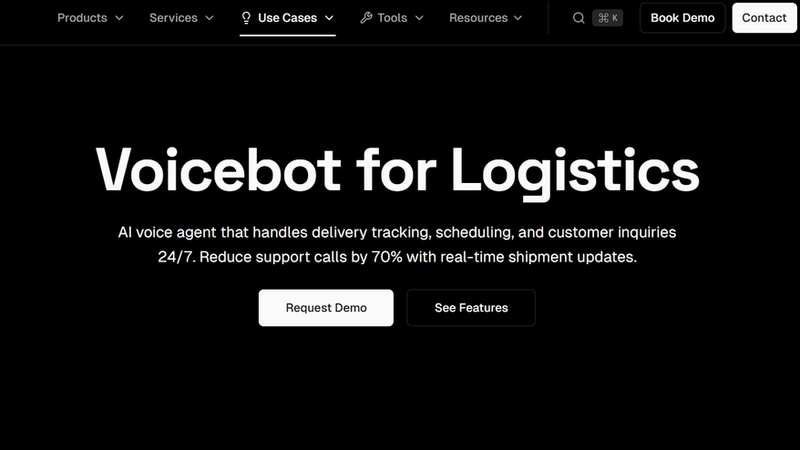
Best for courier, freight, and last-mile delivery companies that want voice AI for delivery updates, address confirmation, pickup scheduling, shipment tracking, and reattempt coordination
Edesy is a solid option for logistics teams that need voice AI for last-mile and delivery-side operations.
Its coverage is broad in a useful way. It handles delivery updates, pickup scheduling, shipment tracking calls, route confirmations, address checks, and reattempt-related communication. So if your team is spending time on the calling side of delivery execution, Edesy covers the kind of work that usually sits with ops or support teams.
It is especially relevant for teams operating in India.
Key features that matter for logistics companies (Type: Courier / last-mile delivery / freight)
- Delivery update calls
- Pickup scheduling
- Route confirmations
- Shipment tracking calls
- Address verification
- Failed-delivery follow-ups
- India-focused multilingual support
- Courier integration examples
Pros and Cons
| PROS | CONS |
| Strong fit for courier, freight, and last-mile teams handling delivery updates and confirmations. | More India-focused than globally broad. |
| Covers useful workflows like address checks, pickup scheduling, tracking calls, and reattempts. | |
| Useful for multilingual delivery ops, especially for India-based teams. | |
| Has concrete logistics use cases tied to courier and delivery operations. |
3. Ringg AI
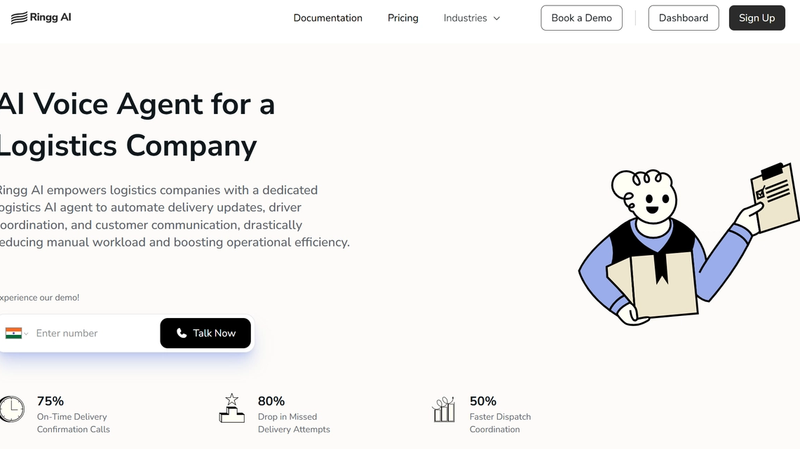
Best for logistics companies that want 24/7 voice automation for delivery updates, driver coordination, and customer communication in multiple languages
Ringg AI works well for logistics teams that want a broader communication layer across customer updates, delivery coordination, and driver support.
It covers the kind of workflows that show up every day in logistics: shipment updates, missed-delivery rescheduling, customer communication, and support for delivery-side operations. It is not as narrow as an NDR-only product, which can be a good thing if your team needs help across multiple call types instead of one specific workflow.
It is also a strong option for teams that care about multilingual support and round-the-clock availability. If your operations run across regions or your call volume does not stop after business hours, that matters.
Key features that matter for logistics companies (Type: Courier / e-commerce delivery / logistics support)
- Shipment status alerts
- Missed-delivery rescheduling
- Driver support workflows
- Multilingual customer communication
- 24/7 voice automation
- Broader order-tracking use cases
Pros and Cons
| PROS | CONS |
| Users like the natural voice quality, fast setup, and ability to handle call volume. | Some users want deeper analytics to see where calls are failing. |
| Its logistics page covers delivery updates, missed-delivery rescheduling, and driver support. | Buyers with very specific NDR needs may need to check workflow depth in a demo. |
| A solid option for multilingual customer and driver communication. | |
| Reviews also mention easy setup and helpful support during rollout. |
4. ClickPost PARTH

Best for e-commerce logistics teams focused on cutting RTO and resolving failed deliveries faster with AI voice calls built specifically for NDR management
ClickPost PARTH is one of the most direct options for teams dealing with failed deliveries and return-to-origin pressure.
Its main strength is focus. It goes straight after NDR resolution with AI-driven customer calls, reattempt scheduling, multilingual communication, and workflow automation around failed delivery scenarios. If that is the main operational headache your team is trying to fix, this is one of the most relevant products in the list.
There is also value in the fact that it sits inside a broader post-purchase logistics product. That can help if you want more than just voice automation and prefer one system covering multiple parts of the delivery journey.
Key features that matter for logistics companies Type: E-commerce delivery / NDR-heavy logistics teams
- AI customer calls for failed deliveries
- NDR workflow automation
- Reattempt scheduling
- Real-time updates
- Multilingual communication
- Returns and post-purchase tooling
| PROS | CONS |
| Strong for multi-courier operations, real-time tracking, and automated NDR handling. | You may find it costly |
| PARTH is clearly built for failed-delivery calls and faster reattempt scheduling. | If you only want a voice layer, the broader product may feel bigger than needed. |
| Users often mention smooth onboarding, responsive support, and lower RTOs. | |
| Good if you also want returns, refunds, and post-order logistics tools in one platform. |
5. eShipz
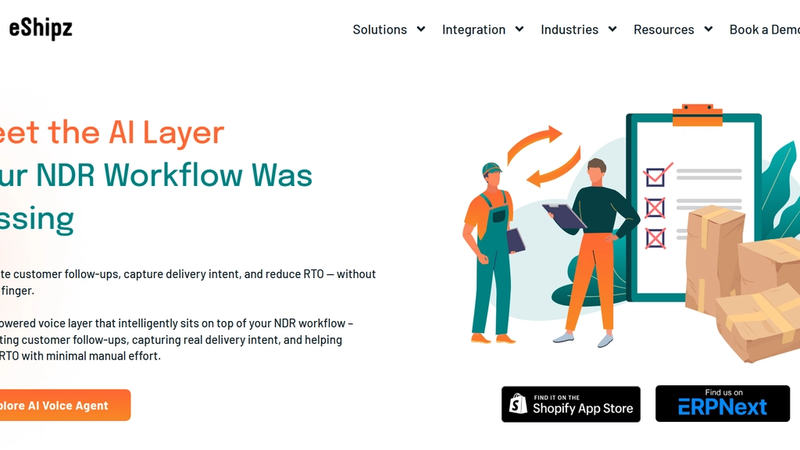
Best for logistics teams that want conversational AI to handle failed-delivery follow-up calls, capture customer intent, and update courier workflows in real time
eShipz is another strong option for teams where failed-delivery calling is taking up too much manual effort.
The value here is simple. When a delivery fails, the system calls the customer, captures what they want to do next, and pushes that back into the workflow. That cuts down the manual back-and-forth and helps teams move faster on reattempts, updates, and next steps.
This makes eShipz a good fit for courier teams, e-commerce delivery ops, 3PLs, and CEPs that deal with large NDR volumes. It is more focused than broad freight or dispatch tools, and that focus works in its favour if NDR is where most of your call load sits.
Key features that matter for logistics companies (Type: Courier / e-commerce delivery / 3PL / CEP)
- Voice-led NDR follow-ups
- Intent capture
- Real-time workflow updates
- Call visibility and reporting
- Multi-courier dashboard
- High-volume and multi-region support
- Public starting price available
Pros and Cons
| PROS | CONS |
| Strong on NDR follow-up calls, intent capture, and updating courier workflows in real time. | Some users faced sync issues, slow updates, and occasional status mismatches. |
| Users like the single dashboard, easy onboarding, and helpful support. | More NDR-focused than broad dispatch-focused. |
| A good fit for teams trying to reduce manual NDR calling during busy periods. | |
| Feels more conversational than basic IVR-style failed-delivery handling. |
6. VoiceGenie
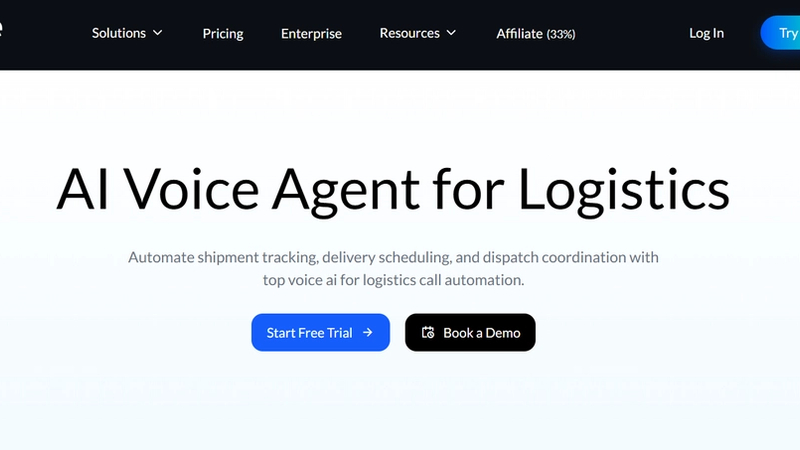
Best for freight and logistics teams that want voice AI for shipment tracking, delivery scheduling, dispatch coordination, and routine call handling at scale
VoiceGenie makes the most sense for freight and logistics teams managing a steady flow of routine calls around movement, coordination, and scheduling.
Its use cases cover shipment tracking, delivery scheduling, dispatch coordination, freight booking, and outbound follow-ups. So if your team handles lots of repetitive calls around loads, routes, or shipment status, this is where VoiceGenie becomes relevant.
It is not the tightest fit for teams looking mainly at failed-delivery recovery or last-mile exception handling. But for freight-heavy operations and general logistics support workflows, it belongs in the shortlist.
Key features that matter for logistics companies (Type: Freight / dispatch-heavy / logistics support)
- Freight booking and load confirmations
- Shipment tracking updates
- Delivery scheduling
- Dispatch routing
- Outbound follow-ups
- Human transfer for complex cases
Pros and Cons
| PROS | CONS |
| Strong fit for shipment tracking, delivery scheduling, dispatch coordination, and routine logistics calls. | It leans more towards freight and dispatch than NDR-heavy last-mile use cases. |
| A good option for teams handling lots of repetitive tracking and scheduling calls. | |
| Includes human transfer for cases the AI should not handle alone. | |
| Clearly built for enterprise and high-volume call operations. |
7. Retell AI
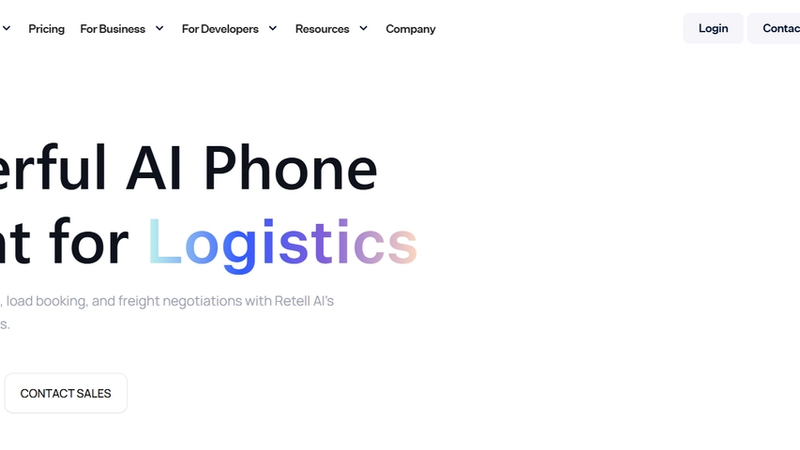
Best for freight, transportation, warehousing, and fleet teams that want to automate dispatching, load booking, broker or carrier communication, and freight rate negotiation calls
Retell AI is the broadest platform in this list.
It is less of a courier or last-mile specialist and more of a flexible voice AI platform that can be used for logistics workflows like dispatching, load booking, broker communication, freight negotiations, warehousing, and fleet operations.
This is why Retell AI makes more sense for freight-heavy teams or companies with technical resources that want to build more custom workflows and deeper integrations.
Key features that matter for logistics companies (Type: Freight / transportation / warehousing / fleet services)
- Dispatching
- Load booking
- Freight negotiations
- Carrier outreach
- Shipment status checks
- TMS and CRM integrations
- Low-latency AI phone stack
Pros and Cons
| PROS | CONS |
| Strong for freight dispatch, load booking, broker calls, and carrier follow-ups. | There's a learning curve |
| A good fit for teams that want deep integrations with TMS, CRM, and workflow tools. | More platform than you might need |
| Users often praise its low latency, voice quality, and API flexibility. | Pricing can climb as call volume increases |
| Makes the most sense for broader freight and transportation workflows. |
Conclusion
The best voice AI platform for your logistics team depends on what kind of calls are taking over your day.
If your team is mostly stuck in failed delivery follow-ups, address fixes, rescheduling, and delivery coordination, you should focus on platforms built for that reality. If your work is more around freight, dispatch, booking, and broker communication, your shortlist should look different.
That is the main thing to keep in mind when comparing these tools. They are all in the same broad category, but they are not all solving the exact same problem.
For courier companies, e-commerce logistics teams, and delivery ops teams dealing with heavy call volumes, Reachall is a strong place to start because it is built around the manual calling problem itself. It fits the repetitive, operational side of logistics work very well, which is usually where teams feel the pain first.
Frequently Asked Questions (FAQs)
1. What are voice AI platforms for logistics companies?
They are tools that automate logistics-related phone calls. That can include failed delivery follow-ups, address confirmation, shipment updates, pickup reminders, dispatch coordination, partner communication, and similar routine workflows.
2. What logistics problems can voice AI actually solve?
The best use cases are the repetitive ones. Things like NDR follow-ups, address validation, rescheduling, shipment updates, pickup reminders, and routine ops coordination are usually the easiest places to see value.
3. Is voice AI a good fit for NDR and failed delivery follow-ups?
Yes. In fact, this is one of the strongest use cases in the market right now. If your team is spending too much time on failed-delivery calls and repeat attempts, voice AI is a very practical place to start.
4. Can voice AI handle multilingual logistics calls?
Yes, many platforms can. But you should still test your actual use cases, languages, and accents before making a decision. On paper, multilingual support can sound the same across vendors, but the real experience can vary a lot.
5. Will voice AI replace my logistics support or operations team?
Usually no. The better setup is to let AI handle repetitive calls and let humans take over when the case gets messy, sensitive, or unusual. That is where voice AI tends to work best.
5. What should I look for when shortlisting a voice AI platform for logistics?
Start with your actual workflow. Are you trying to fix failed deliveries, manage address issues, automate tracking calls, or handle dispatch communication? Then look at things like language support, human handoff, integrations, reporting, and whether the platform can actually fit your ops process.
6. Should I choose a logistics-focused tool or a general voice AI platform?
If your use case is very logistics-specific, a more focused product can get you faster value. If you have a technical team and more custom workflows, a broader platform can make sense too. It depends on how much you want ready-made workflow fit versus flexibility.
If you’re not sure which to pick, start with ReachAll. It’s a broader platform but still fits logistics use cases well (courier, e-commerce delivery, and other delivery options).
7. How do I measure ROI from a logistics voice AI rollout?
Keep it simple. Look at manual calls avoided, time saved, resolution speed, failed-delivery recovery, team hours freed up, and whether the platform helps you cover peaks without adding more people.
8. Can voice AI also help with outbound partner or broker calls?
Yes, some tools can. But not all vendors in this list are equally strong there. Some are better for customer and delivery ops calls, while others are better for freight, dispatch, and broker communication.
9. Which platform should courier and e-commerce delivery teams start with?
If your biggest pain is manual calling around NDR, address fixes, and delivery coordination, Reachall is a strong first option to evaluate. If your needs are more narrowly NDR-focused, ClickPost PARTH and eShipz are also worth a look.